
The book
Parent.
Patient.
Practitioner.
Recognize dysfunction, ask better questions, advocate for healing.
Launching
What if the symptoms you've learned to live with aren't actually normal? This book was written for the moment you begin to wonder: what are we missing?
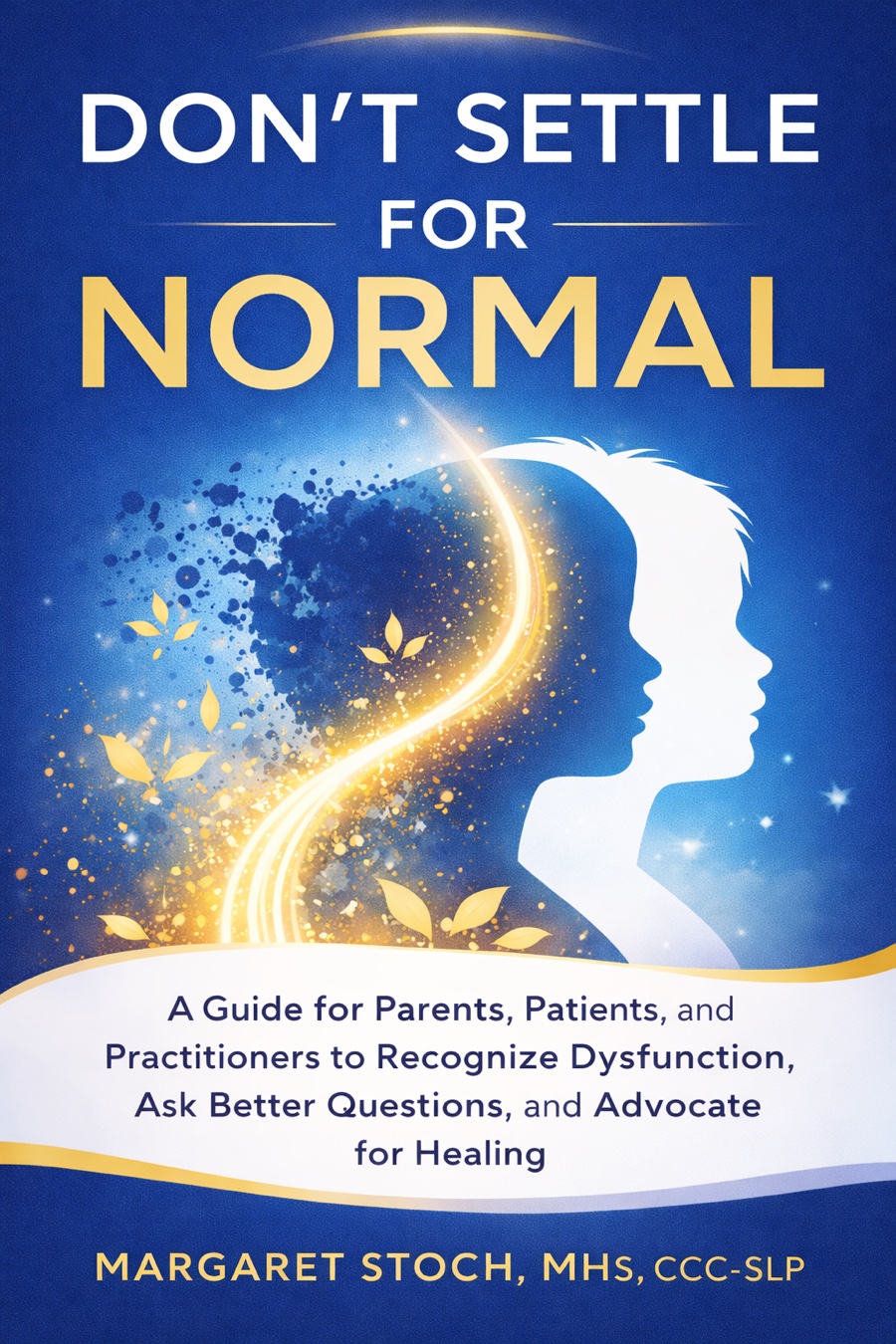
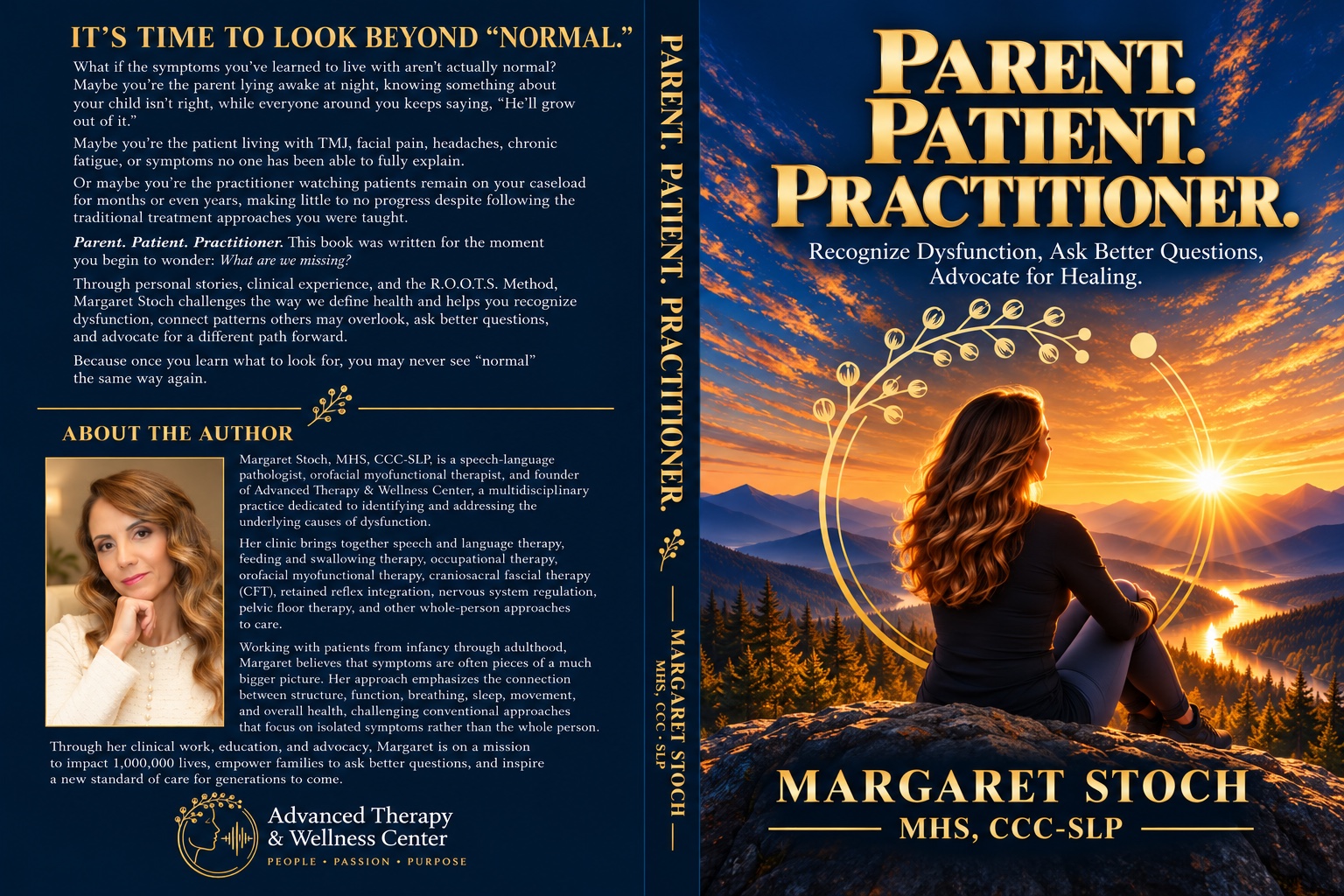
From the back cover
It's time to look beyond "normal."
What if the symptoms you've learned to live with aren't actually normal?
Maybe you're the parent lying awake at night, knowing something about your child isn't right, while everyone around you keeps saying, "He'll grow out of it."
Maybe you're the patient living with TMJ, facial pain, headaches, chronic fatigue, or symptoms no one has been able to fully explain.
Or maybe you're the practitioner watching patients remain on your caseload for months or even years, making little to no progress despite following the traditional treatment approaches you were taught.
Parent. Patient. Practitioner. This book was written for the moment you begin to wonder: What are we missing?
Through personal stories, clinical experience, and the R.O.O.T.S. Method, Margaret Stoch challenges the way we define health and helps you recognize dysfunction, connect patterns others may overlook, ask better questions, and advocate for a different path forward.
Because once you learn what to look for, you may never see "normal" the same way again.
Why this book exists
I still remember the night I sat up alone in a quiet house, my phone glowing in the dark, reading a symptom list that matched my son line by line. I am a speech-language pathologist. The signs sat in front of me for years, in my own home, and the system missed them anyway.
The best specialists ruled out the deadly things and sent us home with no answers. The answer had been in his mouth the whole time.
This book is everything that night taught me and everything the years since have proven in my clinic: how to recognize what the fifteen-minute appointment misses, how to ask the questions that change the conversation, and how to build the team that finally connects the dots. I wrote it as a clinician, as a mother, and as a patient still walking through her own treatment.
Who it's for
Three readers, one thing in common.
A gut that won't stop talking, and the guts to listen to it.
The mother who is done being told it's normal
The one reading at 2am. The one whose gut won't stop talking. You noticed something. You always did.
The adult patient who refuses to settle
The one handed "that's just how you are" for decades. It is not too late, and you are not broken.
The practitioner who refuses to look away
The one feeling the pull toward something you cannot quite name yet. This is the map between the specialties.
Inside the book
The R.O.O.T.S. Method
Five steps that move a family from confusion to clarity. Real healing happens when we address root causes, not symptoms.
Read the full overview →- R
Recognize the red flags
Become a skilled observer of your own family. Document patterns so organized that dismissal becomes difficult.
- O
Observe function, not just structure
Straight teeth can hide a collapsing airway. Function is the truth; structure is just the screenshot.
- O
Own the why
Move past labels to mechanisms. A brain in survival mode doesn't sit still, focus, or learn calmly.
- T
Team-based collaboration
The right experts, in the right order, actually talking to each other. Nobody owns the whole picture until you build the team that does.
- S
Strengthen and sustain
Real change happens in the 168 hours between appointments. Consistency beats perfection.
While you wait
Free ebook
FEED. BREATHE. GROW.
My parent-friendly guide to breastfeeding challenges, tongue ties, and early oral development. Free, sent to your inbox.
Get the guide →The storefront
Tools I recommend
The chewing tools, nasal breathing supports, and feeding helps I actually suggest to families, gathered on Amazon.
Browse the storefront →Launching
Join the waitlist.
Parent. Patient. Practitioner. launches January 13, 2027. Leave your name and email and you'll hear from me the day it's ready, along with anything I share with readers first. Nothing else, no noise.